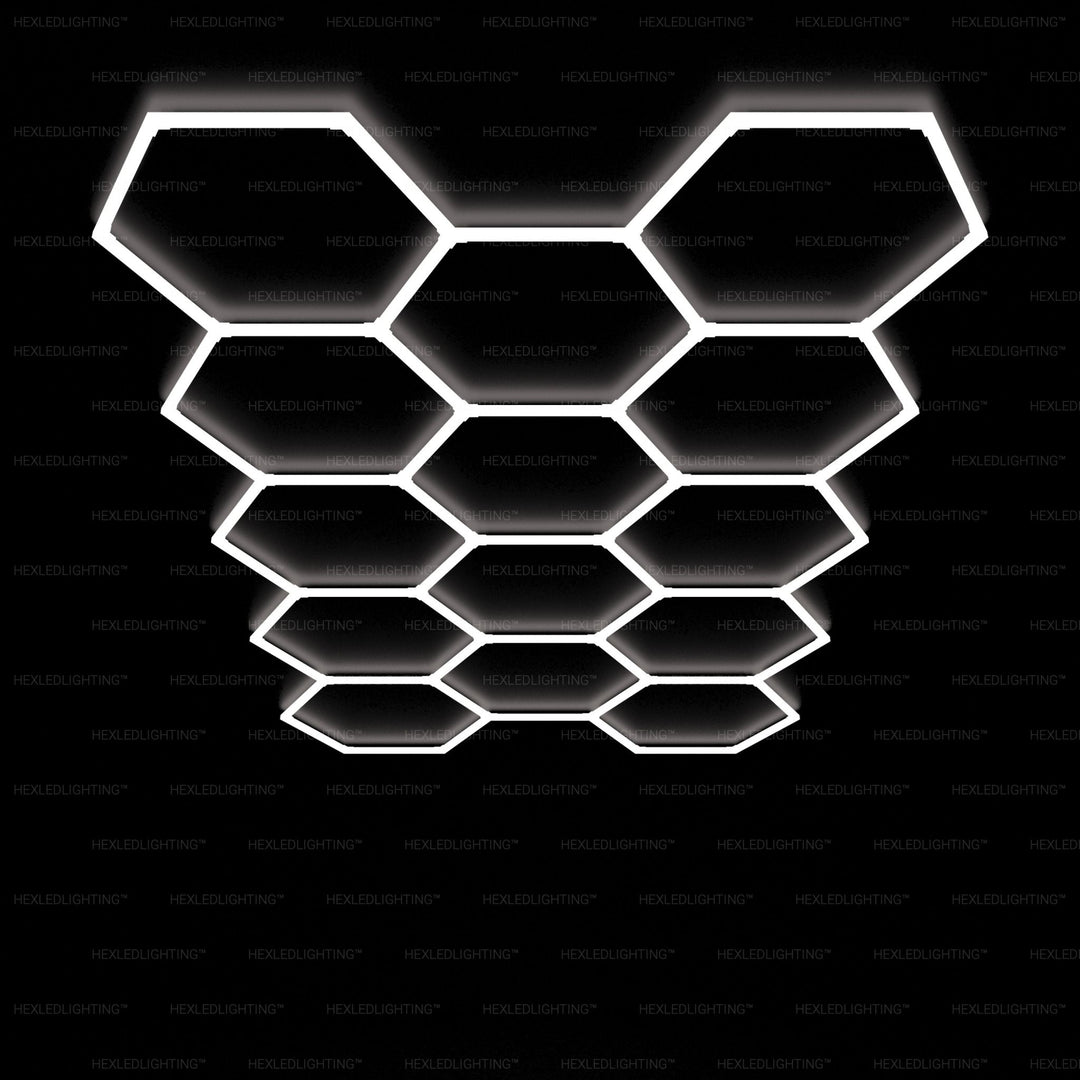
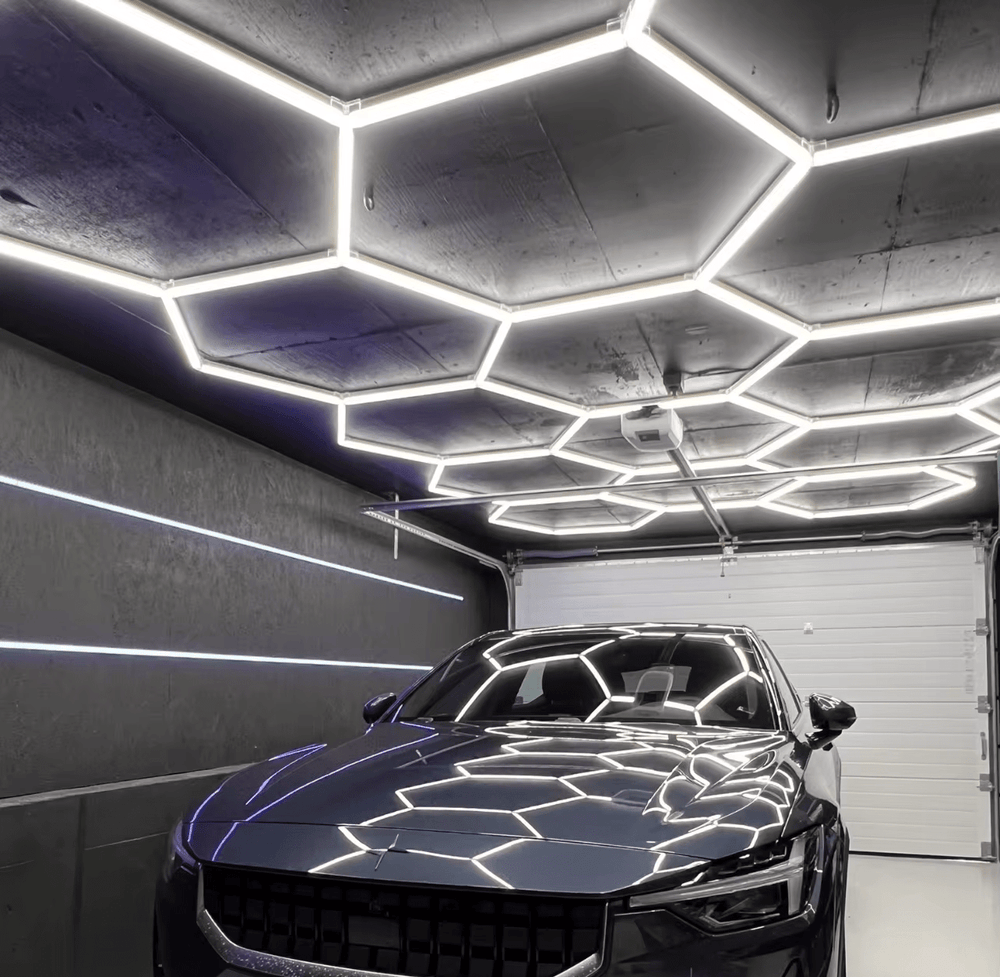
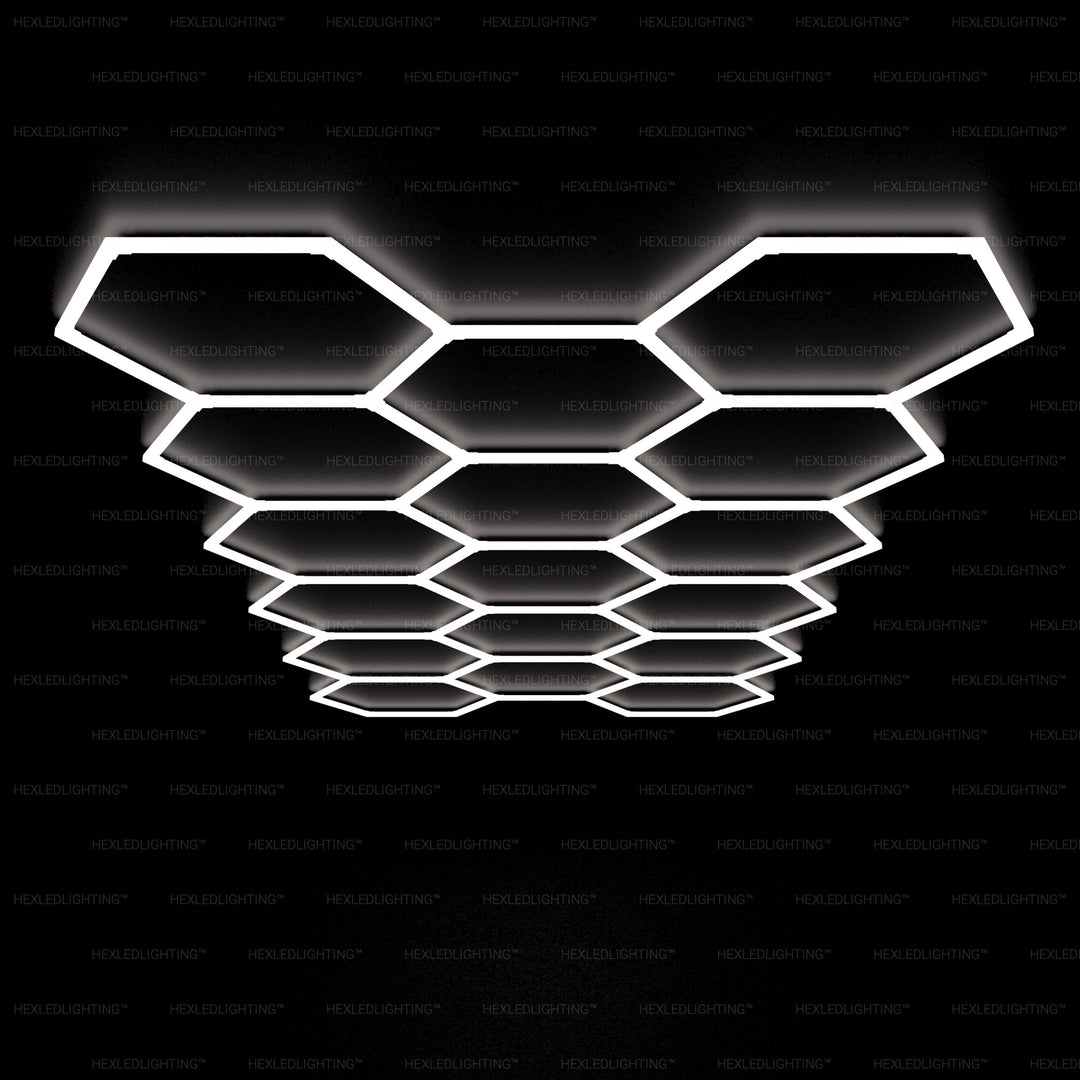
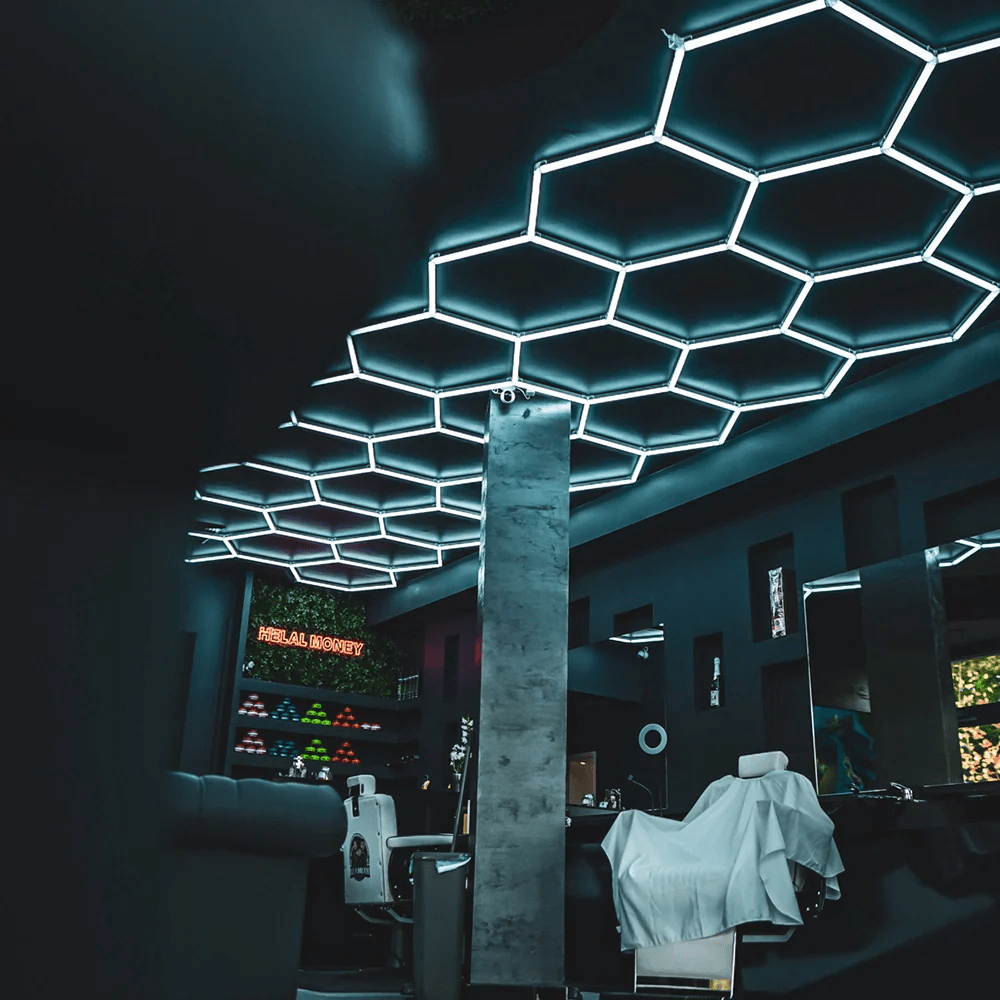
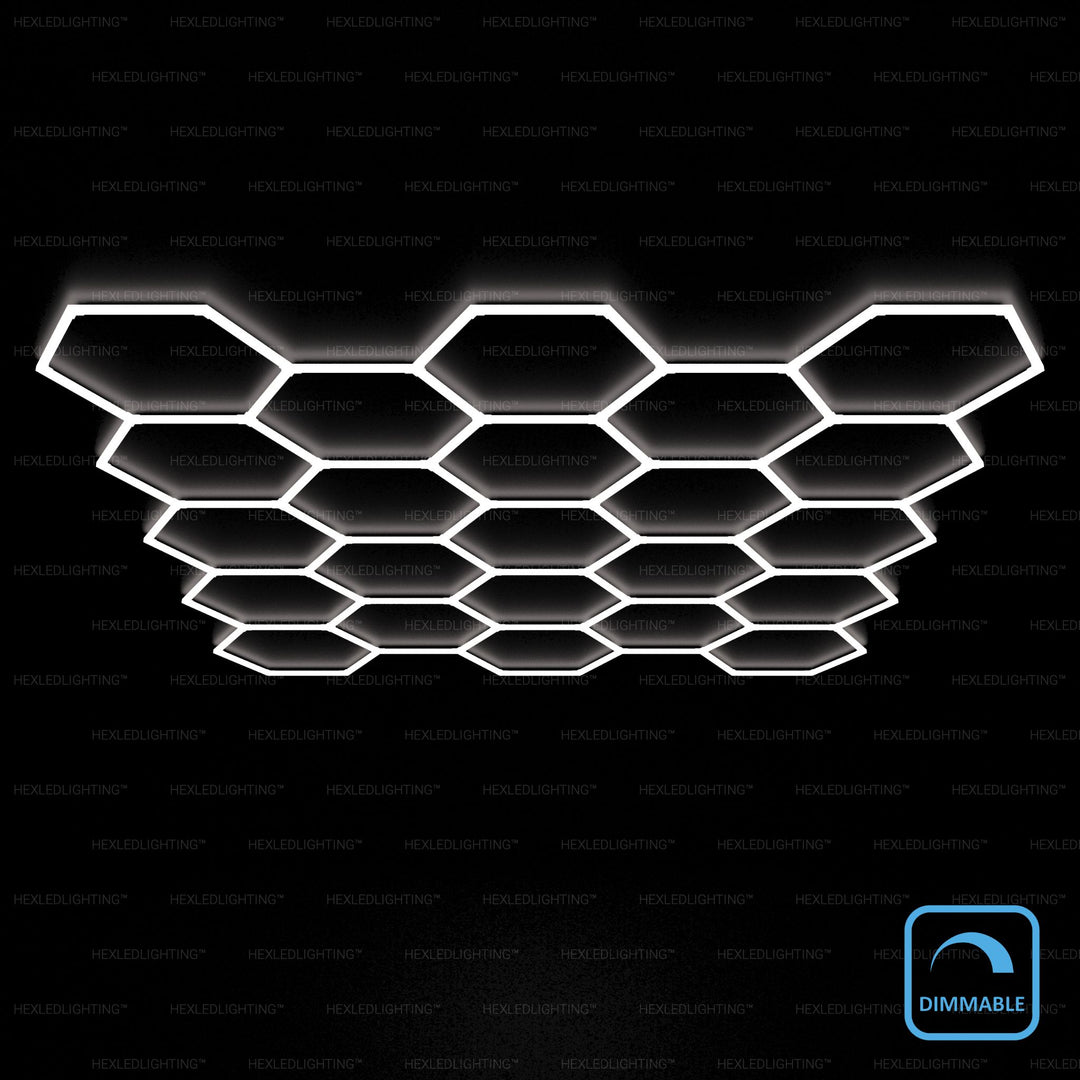
Hexagon lights for one 14 x 20 ft detailing bay cost one kit, a 17 Grid at home detailing brightness or a 23 Grid at pro brightness. Two pro bays in one open room can share a Large 39 Grid, which can bring the cost per bay down. Pro costs more because paint correction needs 200 to 360 lumens per square foot, against 130 to 180 for a home bay. Kit prices change with our promotions, so they are listed live at the end.
In this guide
Every kit size and lumen figure here comes from the product pages in our car detailing shop lighting range. It's written for home detailers pricing a garage bay and shop owners pricing several.
Our team has spent over 13 years in the lighting industry, and this is the math we run when a detailer asks what a bay will cost. We sell these kits. Custom layouts, electrician rates and mobile detailing are outside this guide.

How to Price a Detailing Bay in Three Numbers
We call it lumens-first pricing. Detailers have walked a drop light around the car for decades, but a ceiling grid is priced by the floor it has to light.
- Floor area. Length times width, in feet.
- Brightness tier. Lumens per square foot for your work, from the table.
- Kit. Area times tier gives the lumens to aim for. The kit whose stated output clears the bottom of that range sets your price.
Lumens per square foot is a kit's total light output divided by the floor area it lights. The mistake our team sees most is pricing by kit footprint, which fits the ceiling but says nothing about the light on the paint, as the two 14 x 20 ft rows below show.
| Brightness tier | Lumens per sq ft |
|---|---|
| Parking and storage | 50 to 75 |
| DIY garage work | 90 to 130 |
| Home detailing bay, washing and light polishing | 130 to 180 |
| Pro detailing bay, paint correction and coating | 200 to 360 |
The tiers are our team's planning version of the illuminance ranges published by the Illuminating Engineering Society, with the pro tier reaching up to the IES final-inspection level. Layout and brightness in depth are in our auto detailing lighting guide.
What a Detailing Bay Costs, Kit by Kit
Five example bays, sized the lumens-first way. "Lands at" is the kit's stated output divided by floor area, and the kit in each row sets that bay's cost.
| Example bay | Kit and footprint | Kit output | Lands at |
|---|---|---|---|
| Home, 12 x 20 ft (240 sq ft) | 14 Grid, 13.1 x 7.9 ft | 37,620 to 41,040 lm | 157 to 171 lm/sq ft |
| Home, 14 x 20 ft (280 sq ft) | 17 Grid, 16.4 x 7.9 ft | 44,880 to 48,960 lm | 160 to 175 lm/sq ft |
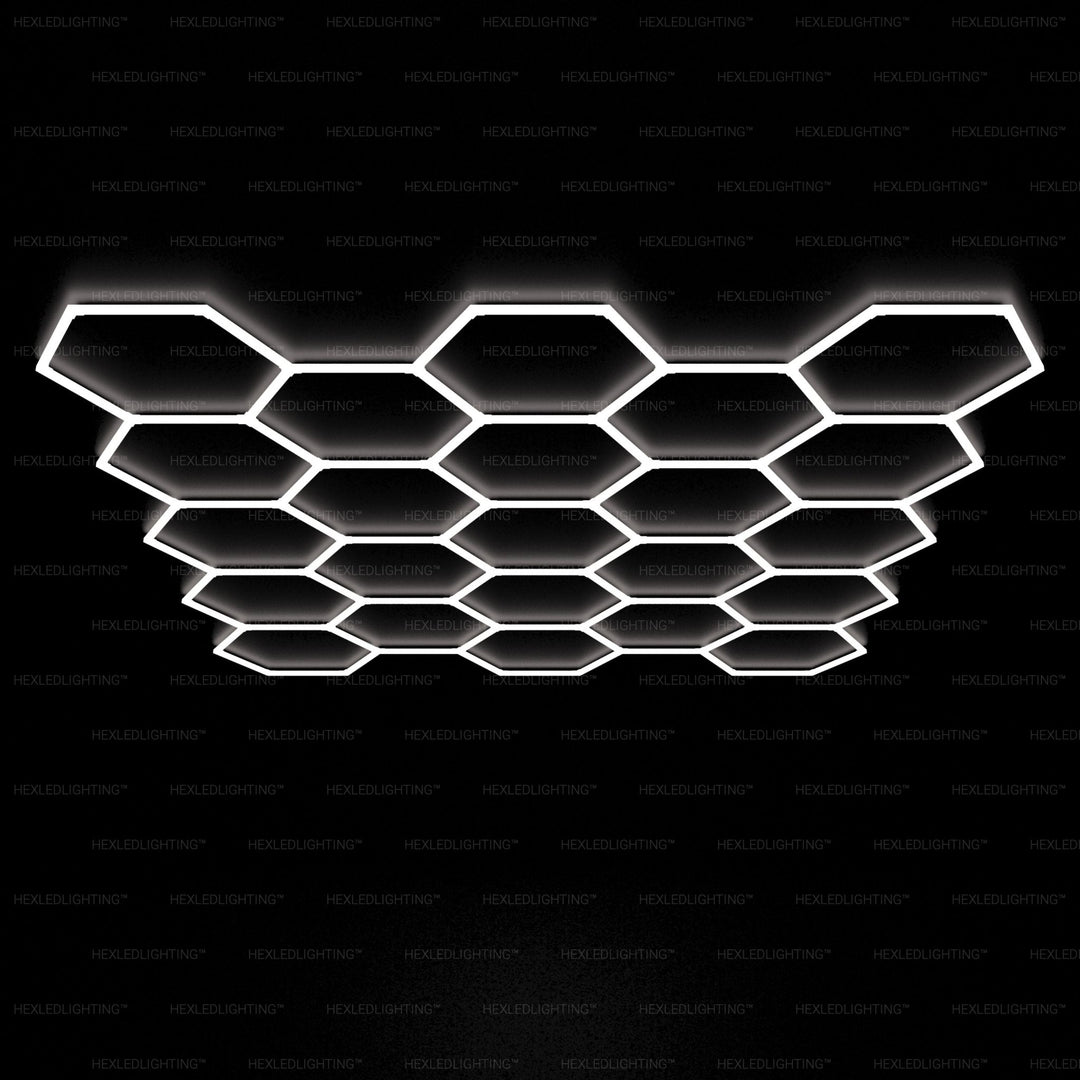
| Pro, 14 x 20 ft (280 sq ft) | 23 Grid, 13.8 x 12.8 ft | 58,080 to 63,360 lm | 207 to 226 lm/sq ft |
| Home two-car, 20 x 20 ft (400 sq ft) | 23 Grid, 13.8 x 12.8 ft | 58,080 to 63,360 lm | 145 to 158 lm/sq ft |
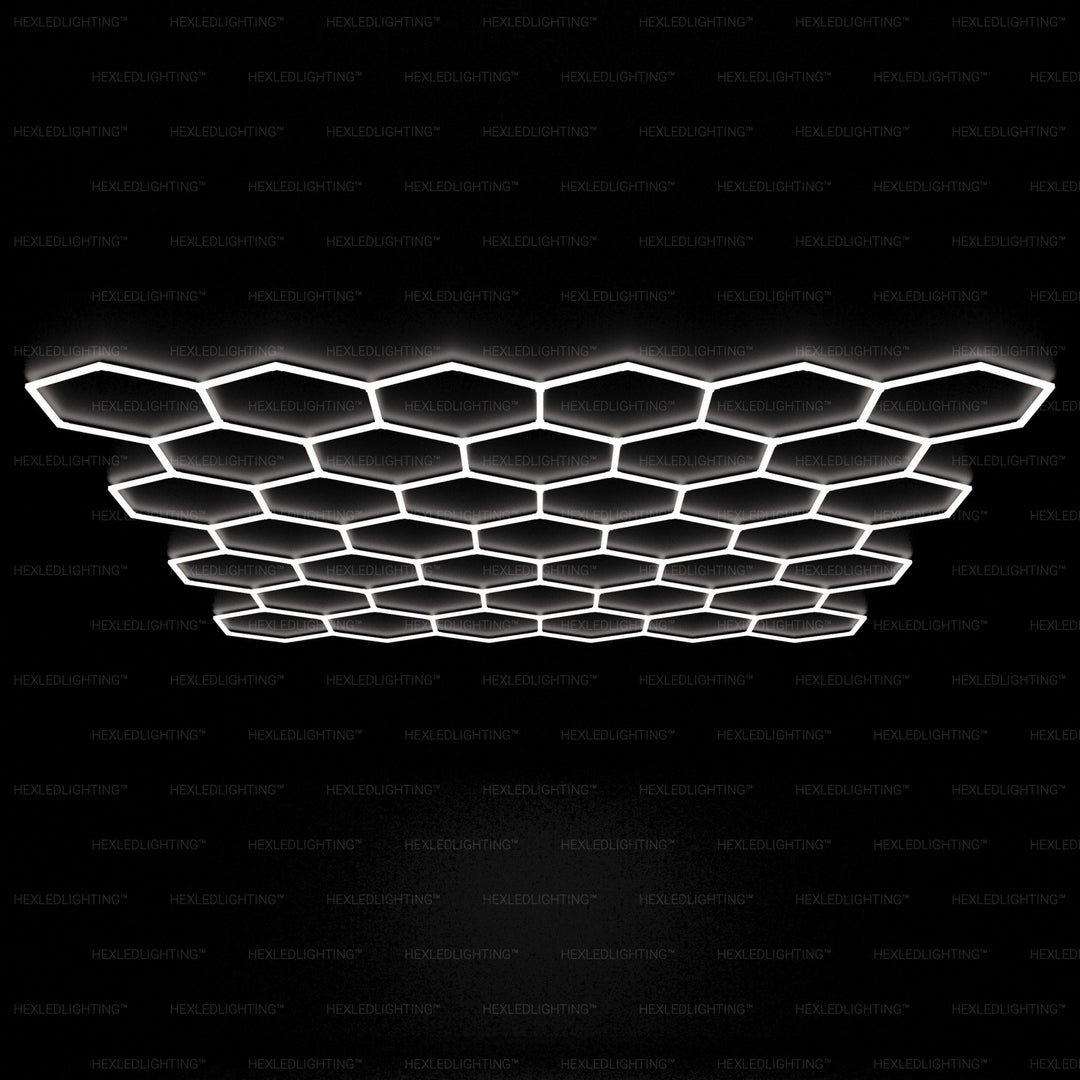
| Pro, two bays, 24 x 24 ft (576 sq ft) | Large 39 Grid hex light kit, 20 x 21.5 ft | 124,960 to 136,320 lm | 217 to 237 lm/sq ft |
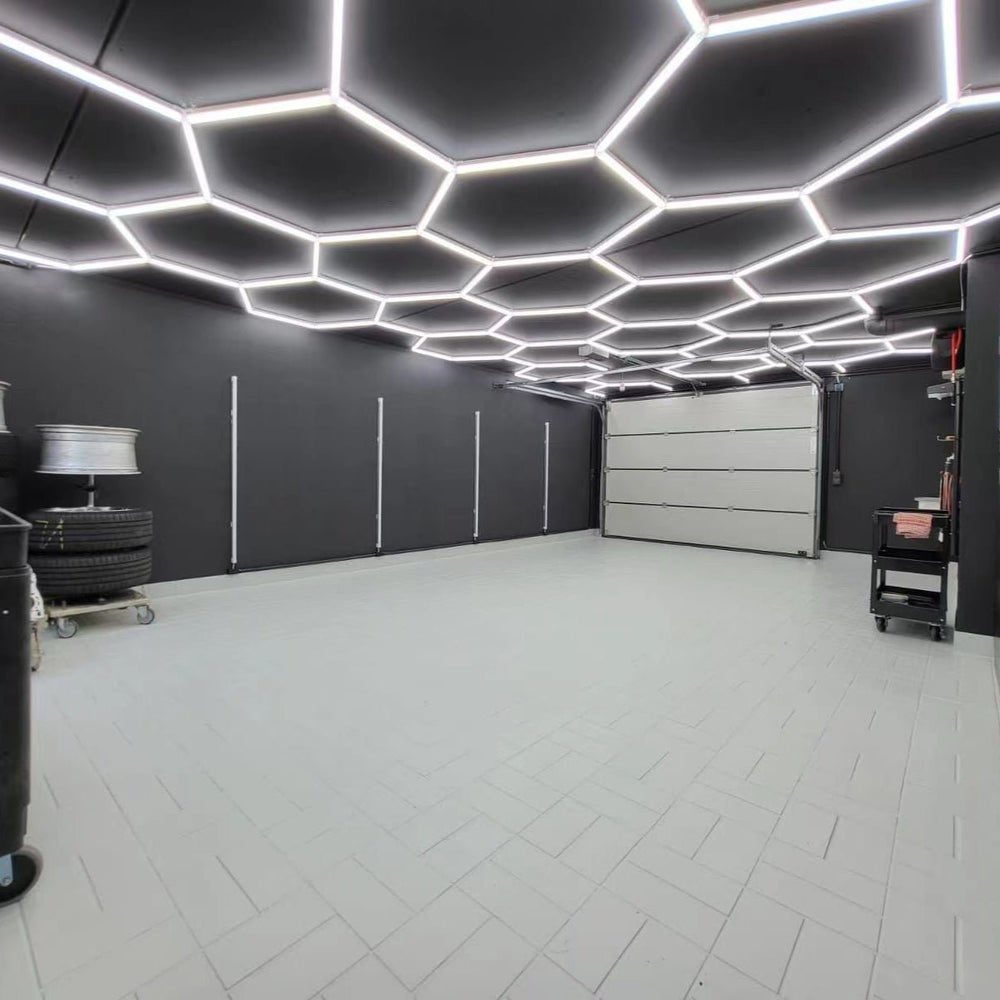
The 23 Grid shows up twice, as a home light over a two-car garage and a pro light over one bay. Pro is a brightness level, not a product. In an open room, one large grid shared by two bays can cost less per bay than a grid per bay, so compare a Large 39 Grid against two 23 Grids in the live list at the end.

Check each footprint against the ceiling, door track and any lift. A 23 Grid is 12.8 ft across, too wide for a 12 ft bay, so a narrow bay takes two smaller kits priced the same way.
Home Bay vs Pro Bay, Same Floor
On one 14 x 20 ft bay, going from home to pro brightness means stepping up from the 17 Grid to the 23 Grid, so the extra cost is the gap between those two kit prices. For a shop, multiply that gap by bay count. Our team would rather see a pro bay's first kit clear the pro tier, leaving room for a second kit later, than one sized only to fit the ceiling.
Home detailers wanting softer light on wash days and full output for correction can step up to the dimmable 23 Grid. It moves between 30%, 60% and 100% with a standard wall switch.
Order 6500K for detailing. Every kit here costs the same in 3000K, 4000K, 5000K or 6500K, chosen at order and fixed after install. Our paint correction lighting guide explains why 6500K and a CRI (color rendering index) above 90 suit paint work.
Costs the Kit Price Leaves Out
- Electrician. Smaller non-dimmable kits ship with a plug-in cord. Larger kits and all dimmable kits ship with hardwire cables, so have a licensed electrician connect those and quote the connection.
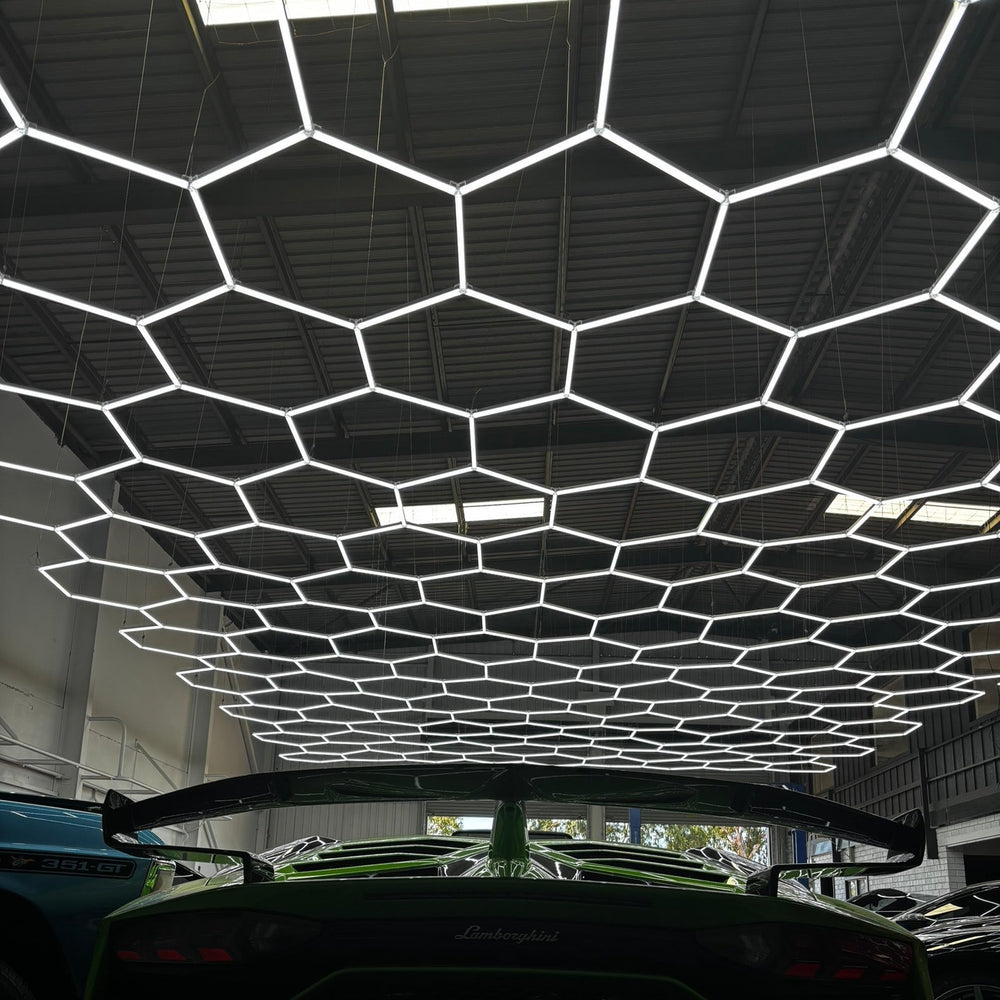
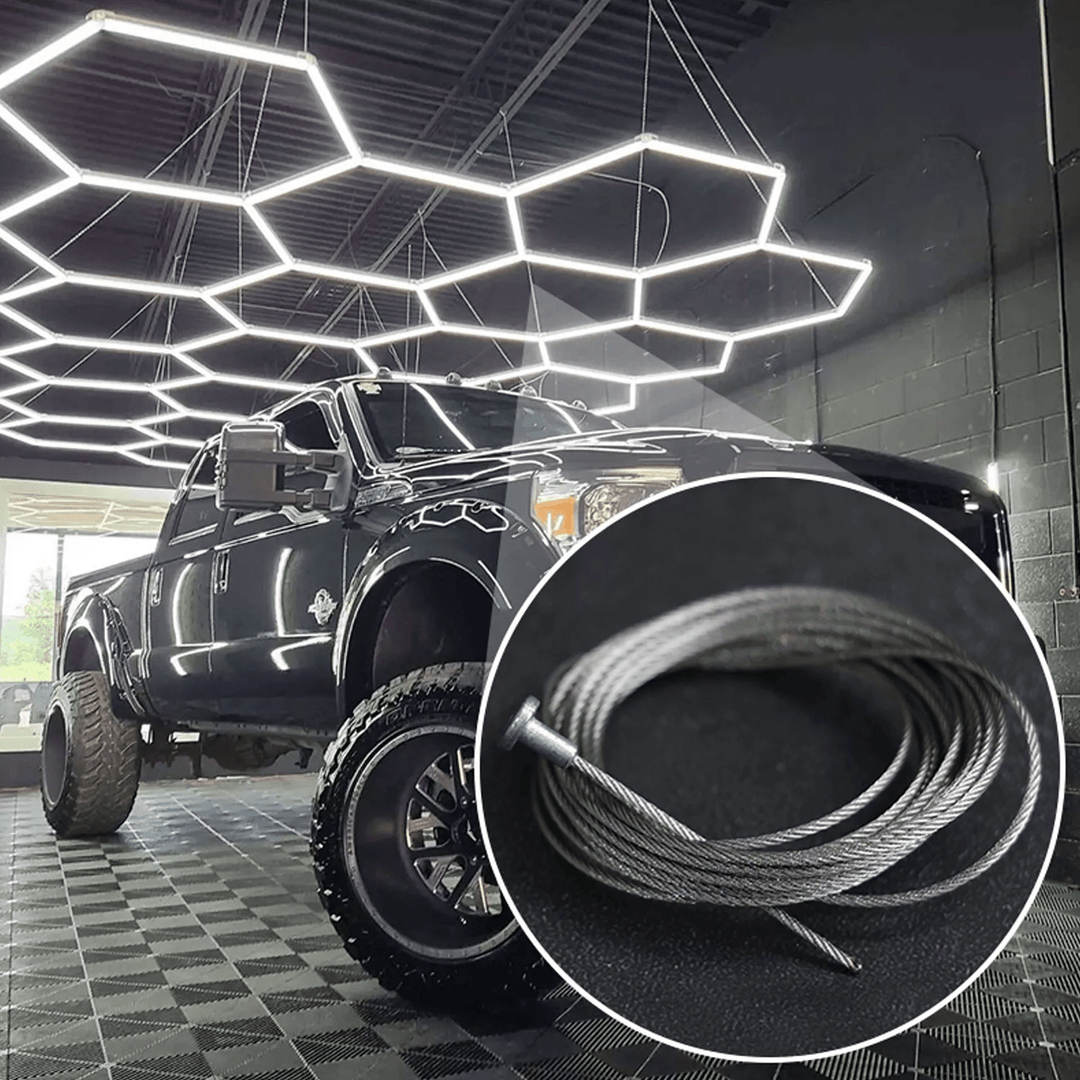
- Hanging hardware. Kits surface mount on ceilings up to about 13 ft. Higher ceilings hang the grid on suspension wires, and our suspension kit comes in 3.3 ft and 9.8 ft cable lengths and is a small line item next to the kit price.
- Custom layouts. If a lift, beam or exhaust run breaks up the ceiling, our team can draw a custom layout from your measurements, quoted separately.
Mounting steps are in our installation guide.

Running Costs
HEXLED tubes are rated for 50,000+ hours, and each tube has its own driver, the power supply that runs its LEDs. If one fails, the rest stay on and you swap that tube. Replacement tubes come in 5-packs, including the 17.5-inch tubes in the 14, 17 and 23 Grid, so a failed tube is a parts cost, not a new kit. White kits carry a 4-year warranty for home use and 2 years for commercial use.
A Payback Formula You Fill In
A payback period is the time an investment takes to earn back its cost. We won't guess yours, since it rests on your volume.
Payback in months = upfront cost ÷ monthly gain
| Line | How to get it | Your number |
|---|---|---|
| A. Kits | Product page prices | $____ |
| B. Electrician | Quote for any hardwire connection | $____ |
| C. Hanging hardware | Suspension wires above about 13 ft | $____ |
| Upfront cost | A + B + C | $____ |
| D. Redo time saved | Redo hours a month x shop rate | $____ |
| E. Added work | Extra jobs a month x profit per job | $____ |
| F. Power difference | Old lighting power cost minus new | $____ |
| Monthly gain | D + E + F | $____ |
| Payback | Upfront cost ÷ monthly gain | ____ months |
Count only gains the new light creates.
- Line D covers redo work, like hazy swirls, holograms or a high spot a customer finds in bright sun.
- Line E is zero if your calendar is full.
- Line F is each light's power rating, converted to kilowatts, times its hours a month and your electric rate. It can come out negative if the new grid draws more than the old lights.
For the 14 x 20 ft pro bay, upfront is the current 23 Grid price plus your electrician's quote. For a home bay the gain may not be money at all, and a garage where you can see the paint clearly is reason enough.
Next Steps
So a detailing bay costs what its lumens cost. Measure the floor, pick the tier, price the kit that clears it and run the worksheet. Footprints, lumen figures and prices for every size are in the HEXLED detailing collection.
About this article, October 2026. It sizes detailing bays with the lumen figures on our product pages as of , using the IES-based tiers our team plans with.
Frequently Asked Questions
How much does detailing shop lighting cost per bay?
It costs one kit per bay. A 14 x 20 ft bay takes a 17 Grid at home brightness or a 23 Grid at pro brightness, and two bays in one open room can share a Large 39 Grid. Current prices are on each kit's product page.
Why does a pro detailing bay cost more than a home bay?
Pro paint correction and coating need 200 to 360 lumens per square foot, against 130 to 180 for a home bay. More light on the same floor takes a bigger kit.
Is the electrician included in the kit price?
No. Larger kits and all dimmable kits ship with hardwire cables, so a licensed electrician connects them and quotes that work separately. Smaller non-dimmable kits ship with a plug-in cord.
Does 6500K cost more than other color temperatures?
No. Each kit costs the same in 3000K, 4000K, 5000K or 6500K, so order 6500K for detailing. The color temperature is chosen at order and fixed after install.
How do I work out payback on new bay lighting?
Divide the upfront cost (kits, electrician, suspension wires) by the monthly gain (redo time saved, added work, power difference) to get payback in months.